
When a road collapses in Nashville, most people see cones, crews, and delays. What they don’t see is the quiet work that happens first. Before asphalt gets poured or lanes reopen, a civil engineer steps in to figure out why the failure happened. That investigation matters more than the repair itself. Without it, the same problem often comes back.
Road collapses don’t happen out of nowhere. In almost every case, there are warning signs below the surface. A civil engineer’s job is to find those signs, explain what went wrong, and prevent it from happening again—on that road or on nearby properties.
This matters to more than drivers. If public roads can fail, private driveways, parking lots, and development sites can too. Understanding how a civil engineer approaches a collapse helps property owners and developers avoid costly surprises.
Why a Road Collapse Is Treated as an Emergency
A road collapse is not just a surface issue. It’s a safety risk. Once pavement gives way, the ground beneath may still be unstable. Because of that, the first step is not repair—it’s investigation.
A civil engineer looks at the collapse as a system failure. Instead of asking how to patch the hole, they ask what caused the ground to lose support. That mindset protects drivers, nearby properties, and underground infrastructure.
At the same time, it reduces liability. Fixing the surface without understanding the cause can lead to repeat failures. When that happens, costs rise fast, and trust disappears just as quickly.
Stopping the Damage From Spreading
The first priority is stabilization. A civil engineer checks whether the collapse is still growing. In many cases, the visible hole is only part of the problem. The surrounding pavement may already be unsupported.
Engineers look for signs like cracking around the edges, sinking nearby areas, or movement under traffic. If needed, they recommend closures or load limits right away. While this causes short-term inconvenience, it prevents long-term damage.
This same approach applies to private property. A sinking driveway or uneven parking lot may seem minor. However, if the ground below is failing, ignoring it can lead to sudden collapse later.
What’s Happening Below the Pavement
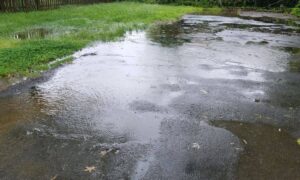
Most road collapses start underground. Over time, soil can wash away, shift, or compress. When that happens, it leaves empty spaces called voids. Pavement is strong, but it can only span so much before it cracks and falls in.
A civil engineer looks for patterns that point to ground loss. Sudden drops, sharp edges, and uneven settlement often tell the story. These clues help engineers decide where to dig and how deep the problem goes.
For property owners, this matters because ground loss often starts small. A slight dip today can become a major repair tomorrow if no one investigates early.
Utilities Are Often the Hidden Trigger
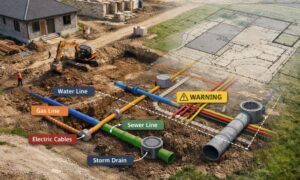
In urban areas, underground utilities are a common cause of collapse. Water and sewer lines run beneath most roads. When one leaks or breaks, it can slowly erode the soil around it.
A civil engineer checks utility locations, ages, and repair history. They also look for signs of long-term leakage, such as damp soil or recurring pavement repairs in the same area. In many cases, the road didn’t fail first—the utility did.
This issue shows up often on redevelopment sites. Older properties may have abandoned or undocumented lines. Without proper review, those hidden systems can undermine new construction or paved areas.
Surface Damage vs. Structural Failure
Not every crack means collapse is coming. That’s why a civil engineer separates cosmetic damage from structural failure. Surface wear shows up as shallow cracking or fading. Structural failure affects the layers that carry weight.
Engineers examine pavement thickness and support conditions. If the base or subgrade moves under load, the surface repair will not last. Knowing this difference saves time and money.
For clients, this explains why repeated patching sometimes feels pointless. If the real issue lies below, fixing the top won’t solve the problem.
How a Civil Engineer Confirms the Cause
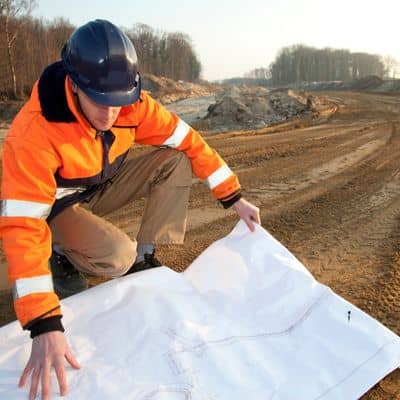
Once risks are identified, the civil engineer gathers proof. This may include small test holes, targeted excavations, or record reviews. Engineers often compare current conditions to original construction plans, if those exist.
They also coordinate with utility providers to confirm line locations and conditions. By combining physical evidence with records, engineers can pinpoint the failure source.
Only after this step does design begin. Skipping investigation often leads to guesswork. That’s when repairs fail early and costs multiply.
Why Nashville Conditions Increase Risk
Nashville has a mix of old infrastructure and rapid growth. Many roads and sites have seen decades of changes. New construction, heavier traffic, and past repairs all affect ground stability.
A civil engineer familiar with local conditions understands these layers of history. They know where problems tend to appear and what warning signs matter most. That local insight helps avoid repeat failures.
The same applies to private developments. Sites with past grading, fill, or heavy construction traffic deserve closer review before problems surface.
What This Means for Property Owners and Developers
Road collapses may grab headlines, but similar failures happen quietly on private land. Parking lots sink. Drive aisles crack. Access roads settle unevenly.
A civil engineer helps identify risks early. Instead of reacting to emergencies, owners can plan targeted repairs. That approach reduces downtime, protects users, and limits liability.
Developers benefit as well. Early investigation prevents delays during construction and avoids redesigns after work begins.
Warning Signs You Shouldn’t Ignore
Certain signs deserve attention right away. Cracks that reappear after repair often signal deeper issues. Sudden dips or uneven areas point to ground movement. Settlement near utility covers also raises concern.
If pavement feels unstable or changes quickly, it’s time to call a civil engineer. Early action almost always costs less than emergency response.
Final Thoughts
When a Nashville road collapses, the repair everyone sees is only the final step. The real work happens earlier, led by a civil engineer who looks below the surface. That investigation protects public safety and prevents repeat failures.
For property owners and developers, the lesson is clear. Most collapses give warnings. Listening early—and involving a civil engineer—turns a crisis into a manageable fix.