
If you own an older home and pay flood insurance, you may have asked this question already: Why is my premium so high when my house has never flooded? You are not alone. Many long-time homeowners face rising flood insurance costs that feel disconnected from reality. In many cases, the issue is not your home. It is missing or outdated data. This is where an elevation certificate becomes more than a requirement. It becomes a tool you can use to challenge how your flood insurance is priced.
Why older homes often pay more for flood insurance
Flood insurance is not priced on history alone. Insurance companies rely on models, maps, and assumptions. If they lack clear elevation data for a property, they often assume higher risk.
Older homes face this problem more than newer ones. Many were built before current flood rules existed. Some were rated years ago and then renewed without review. Others sit near flood zones but actually rest higher than surrounding properties.
However, without proof, insurers do not adjust pricing. As a result, homeowners pay for risks that may not exist.
How flood insurance is priced when elevation data is missing

When an insurance company does not have an elevation certificate, it fills the gaps itself. Usually, that means:
- Assuming the lowest floor sits close to flood levels
- Using area-wide data instead of property-specific data
- Grouping your home with lower-lying homes nearby
Because of this, “unknown” elevation often equals “high” risk. Even if your home sits higher, the policy may reflect the worst-case scenario.
This explains why two similar homes on the same street can pay very different rates. One has verified elevation data. The other does not.
What an elevation certificate actually changes in your policy
An elevation certificate gives insurers facts instead of estimates. It shows where your home sits in relation to flood levels used for pricing.
Once this information enters the underwriting process, the insurance company can reassess risk. Sometimes the result is small. Other times it leads to meaningful premium reductions.
More importantly, the certificate gives you leverage. You are no longer guessing. You are responding with documented proof.
How homeowners use an elevation certificate to challenge insurance costs
This process does not require filing a claim or switching insurance companies. Instead, it focuses on correcting how the policy is rated.
Here is how it typically works.
First, you review your current flood insurance policy. Look for how the home is classified. Many homeowners never see these assumptions until they ask.
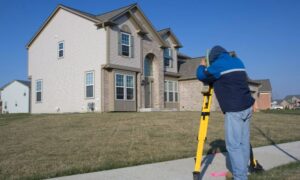
Next, you obtain a current elevation certificate prepared by a licensed land surveyor. Accuracy matters. Old or incomplete documents rarely help.
Then, you submit the certificate to your insurance agent and request a re-rating. This step asks the insurer to recalculate the premium using verified elevation data.
Finally, the insurer issues an updated declaration page if changes apply. This shows whether the premium adjusted.
While savings are not guaranteed, many homeowners see corrections that should have happened years earlier.
Why this works especially well for older homes
Older homes often fall into one of these categories:
- Policies written before updated flood mapping
- Auto-renewed policies that were never reviewed
- Homes elevated during renovations without policy updates
- Properties grouped with lower homes nearby
In each case, the policy may reflect outdated or incorrect assumptions. An elevation certificate gives insurers a reason to revisit those assumptions.
As a result, homeowners finally get pricing based on how their home actually sits, not how it appears on a map.
When an elevation certificate will not lower your premium
It is important to be honest about expectations. An elevation certificate does not guarantee savings.
If your home truly sits below flood levels, the certificate confirms that risk. In those cases, the policy may remain the same. However, even then, the data helps homeowners understand why costs are high and what changes may help in the future.
Also, certificates that contain errors, outdated reference points, or missing signatures often fail to trigger re-rating. Accuracy and proper preparation matter.
Timing matters more than most homeowners realize
The best time to use an elevation certificate is not during a flood event. It is during policy review and renewal windows.
Many homeowners wait until premiums rise and then scramble. However, submitting elevation data before renewal allows insurers to apply corrections smoothly.
Other good times include refinancing, policy changes, or unexplained premium jumps. Each event creates an opportunity for review.
By acting early, homeowners stay in control instead of reacting under pressure.
Why local survey experience makes a difference
Not all elevation certificates are created equal. Local knowledge matters.
Surveyors familiar with Nashville understand grading patterns, neighborhood layouts, and common floodplain issues. They know what insurance companies expect and how to avoid documentation problems that cause delays or rejections.
Because flood insurance relies on precision, working with a local licensed land surveyor reduces risk and improves results.
Turning assumptions into verified facts
Flood insurance pricing is not personal. It follows formulas. Unfortunately, formulas rely on data, and missing data leads to higher costs.
An elevation certificate replaces assumptions with facts. For older homes, this step often reveals that premiums do not match reality.
While not every homeowner sees immediate savings, many finally gain clarity and control. Instead of guessing, they respond with proof.
If you believe your flood insurance does not reflect your home’s true risk, an elevation certificate may be the missing piece. It gives homeowners a fair chance to challenge outdated pricing and protect their investment with confidence.