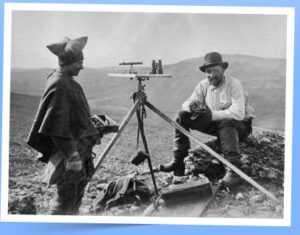
A Short History on Land Surveying

Land surveying is one of the the oldest professions anywhere. After any two individuals own property on opposite sides of a line – land surveying is important.

Land surveying is fascinating. The strategy used aim to determine which section of land is owned by whom, hopefully ending arguments for good.

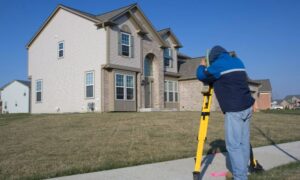
To put it briefly, surveying is really a process using mathematical methods for surveying land to determine its ownership.

The first accounts of surveying land extends back to ancient Egypt. Experts have discovered evidences that the ancient Egyptians used basic geometry to redraw the lines of boundary when the Nile River overflowed. An Egyptian land register going back 3000 BC was found.

Following the Egyptians, the Romans – also the most powerful civilizations within the ancient world – practiced land surveying. They took it a pace further and made “land surveyor” an official position inside the Empire. These folks called agrimensores, often called Corpus Agrimensorum Romanorum. Despite the fact they used rather simple tools, these people were very thorough with their jobs and would create straight lines and proper angles with the use of these tools. As soon as the lines were measured, they’d create shallow ditches to mark the lines. Actually, much of the furrows they made continue to exist today.

One of several recorded land surveying of the “modern” times belongs to William the Conqueror who wrote the Domesday Book in 1086. This book is really a menu of names of land owners, the amount of land they owned as well as other information about the land. While it was a substantial volume of information during this period, the pieces of information weren’t 100% correct. The locations just weren’t accurate and the maps were not made to scale.

Among history’s greatest icons have also been an ardent surveyor – Napoleon Bonaparte. The interest in surveying land was really just a product of his wish to conquer the earth. Napoleon Bonaparte founded a registry referred to as cadastre. This includes a registry of properties of a county, ownership details, locations and as much information concerning the land’s value. Yes, Napoleon Bonaparte can be regarded as a land surveyor – plus a very smart man.

The strategies put to use in land surveying also have evolved over the centuries, over time. Long ago, people would use whatever could help them determine the distance from one point to another. This implies using chains with links and even ropes. Not surprisingly, this didn’t give accurate results but they did not have the technology we now have.

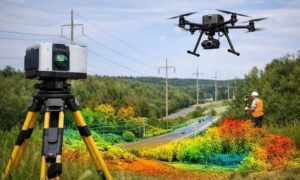
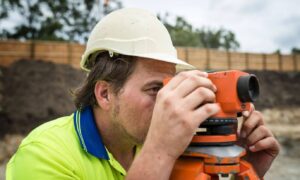
Today, land surveyors possess the best technologies to assist them with their job. There is GPS, or Global Positioning System, which is quite possibly the most accurate technologies available today. Total stations are also crucial to a land surveyor, which employs the utilization of an EDM or Electronic Distance Measurement device together with a theodolite which enables for further precise angle and distance measurements.

author avatar
Surveyor

More Posts

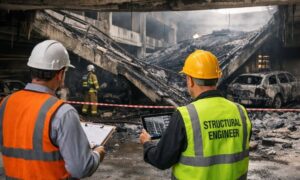
A structural engineer inspects a fire-damaged parking garage, checking beams and supports to identify hidden risks and ensure building safety
civil engineering
Surveyor

How Structural Engineering Finds Hidden Building Risks

A big fire broke out in the downtown parking garage near the Nashville Public Library. Flames and smoke filled the air, and parts of the garage were badly damaged. One of the ramps even collapsed, and firefighters spent hours making sure everyone was safe. People watched the fire on TV

Read More »
3D LiDAR scan showing trees and power lines along a utility corridor for surveying purposes
land surveying
Surveyor

How LiDAR Mapping Is Changing Utility and Tree Surveys

You’ve probably heard the term lidar mapping recently, but what does it really mean? And why is it starting to get so much attention in Nashville? In simple terms, lidar mapping uses lasers to create a very detailed view of the land. Think of it like taking a super-accurate 3D

Read More »
A residential construction site showing a planned layout with visible underground utility lines and drainage paths, highlighting how engineering services help prevent conflicts before building
civil engineering
Surveyor

Avoid Utility Conflicts with Engineering Services

You finally decide to build. Maybe it’s a pool, a driveway, or a home addition. You have a plan in mind, and everything looks clear. The space is open, the layout makes sense, and the project feels simple. Then construction begins. Suddenly, digging stops. Someone finds a pipe, or water

Read More »
A surveyor using a total station to measure property boundaries on a construction site, illustrating licensed land surveyor work
land surveyor
Surveyor

How a Licensed Land Surveyor Protects Your Property Lines

Imagine you’re about to build your dream home or start a new project. You’ve bought the land, made your plans, and hired a contractor. Everything seems ready, but then a neighbor says you can’t go onto part of your property to check the boundaries. Suddenly, you’re stuck and unsure what

Read More »
Civil engineer using a drone to survey a construction site and monitor progress
civil engineering
Surveyor

How a Civil Engineer Uses Drones to Speed Construction

If you’ve driven through Nashville lately, you’ve probably noticed just how fast the city is changing. New houses, offices, roads, and parks seem to spring up almost every week. With all this growth, construction projects need to keep moving, or delays can quickly become expensive. That’s why many developers and

Read More »
A surveyor measuring a residential property to check boundaries and plan a home survey
land surveying
Surveyor

How New Laws Could Raise Your Home Survey Cost

Buying a home is exciting, but it can also feel overwhelming. You’re probably thinking a lot about the price, the neighborhood, and your mortgage. One thing people often don’t think about until it’s too late is the home survey cost. Spending a little time on planning home surveys early can

Read More »