

Nashville is still growing fast. Cranes fill the skyline. New homes rise in every direction. Old buildings turn into modern spaces. However, 2026 has brought a new challenge to many job sites: workforce changes and updated labor rules. Across the country, companies now follow stricter hiring and verification systems, including expanded E-Verify use. While these rules focus on paperwork, they affect real work in the field. Crews may pause while documents clear. Schedules may shift. Trades may move around on the calendar. Because of that, projects can lose their rhythm. When that happens, a construction surveyor becomes even more important.
Workforce Changes Do Not Stay in the Office
At first, labor compliance sounds like something that only affects HR departments. However, in Nashville’s busy construction market, even small delays create bigger problems.
For example, a framing crew may plan to start on Monday. If paperwork delays push them back a week, the contractor must adjust everything. Concrete may already be in place. Steel might arrive early. Other crews may move ahead to stay busy.
As a result, job sites become crowded. Equipment moves more often. Stakes and layout marks can get disturbed. What seemed like a small delay now affects the whole project.
This is where a construction surveyor protects the schedule.
Schedule Changes Increase Layout Risk
Construction follows a clear order. First comes grading. Then utilities. After that comes the foundation. Finally, the building goes up.
However, workforce changes can interrupt that order. When crews leave and return later, contractors often try to make up lost time. They speed things up. They overlap trades. They shorten work windows.
Rushing creates risk.
If someone pours concrete using a stake that moved, fixing that mistake costs money and time. If building lines shift because control points were damaged, the problem spreads fast.
A construction surveyor helps stop that from happening. Before work starts again, the surveyor checks control points. They confirm building corners. They verify elevations. This quick step keeps the project safe and accurate.
Instead of guessing, the team moves forward with confidence.
Nashville’s Growth Leaves Little Room for Error
Many Nashville projects sit on tight sites. Downtown builds have small footprints. Traffic limits delivery hours. Neighboring properties sit close by. Because of that, there is little room for layout mistakes.
Now imagine adding workforce shifts to that tight space.
Crews may rotate more often in 2026. Some subcontractors may combine teams. Others may face short pauses while they meet compliance rules. Even if those changes happen behind the scenes, the job site feels the impact.
A construction surveyor brings order to that pressure.
From the start, the surveyor sets strong horizontal and vertical control. They tie the site to known coordinates and elevation points. They protect offset marks so they stay safe even if surface stakes disappear.
Therefore, when the schedule changes, the layout stays steady.
Control Is the Backbone of Every Project
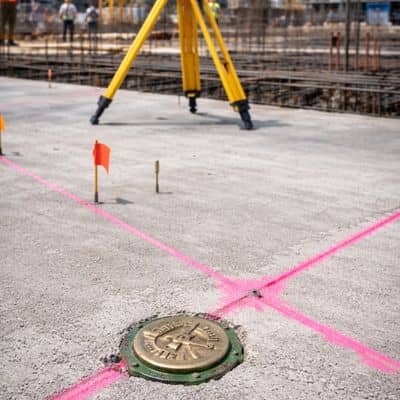
People often focus on what they can see, like walls going up or asphalt being poured. However, hidden control systems guide everything.
Control points mark exact positions. Benchmarks set correct elevations. Grid lines guide structure placement. Without them, crews would not build in the right place.
Workforce shifts make these systems even more valuable. If a project pauses for a few weeks, weather or equipment can move surface markers. Without clear records, restarting work becomes risky.
A good construction surveyor plans for that. They document control clearly. They keep clean records. They build a layout system that survives delays.
Because of that planning, the project does not lose direction.
Re-Checking the Site Protects the Budget
In 2026, many projects may face remobilization. Crews may leave for a time and then return. When they come back, they need an accurate layout right away.
Assuming everything stays perfect during a break can cause trouble.
Instead, a construction surveyor checks the site again before major work resumes. They confirm column lines, slab edges, curb alignments, and utility points. This process does not slow the job down. In fact, it prevents expensive mistakes.
Clear layout builds trust among contractors, owners, and lenders. It keeps everyone confident that the work stands in the right place.
Communication Keeps Everyone Aligned
Workforce changes have increased planning meetings. Contractors now talk more about staffing and timing. That makes survey communication even more important.
A strong construction surveyor stays involved in those talks. If the schedule shifts, they adjust staking plans. If one phase moves ahead of another, they set priorities.
Rather than reacting late, they help guide the plan.
In Nashville’s fast market, that steady approach reduces stress and keeps teams focused.
Stability Matters More Than Ever
Labor rules may continue to change. Verification systems may expand. Workforce patterns may shift. However, your project still needs to stand straight and true.
A construction surveyor provides that stability.
They set accurate control at the start. They protect it during downtime. They verify layout before important work begins again. They keep communication clear when schedules move.
In a growing city like Nashville, where time and money matter, that steady support keeps projects on track.
Workforce changes may influence who works on site. However, precise layout decides how well the project gets built.
And that precision begins—and continues—with a trusted construction surveyor.