

A short video recently spread across social media showing a bus that survived a strong crash. The vehicle looked damaged, yet the main frame stayed in place. Because of that, people online began asking the same question: how did it hold together? The answer comes down to engineering design.
Although the video shows a vehicle, the lesson goes far beyond transportation. In fact, the same design ideas guide buildings, roads, bridges, and development projects. Engineers never assume everything will go perfectly. Instead, they plan for stress, impact, and unexpected events.
Because of this approach, good engineering design helps protect people, property, and investments when things do not go as planned.
Why Engineering Design Thinks About Failure First
Many people believe engineering only focuses on making things work. However, experienced engineers also think about what could go wrong.
For example, they think about what might happen if a structure takes a sudden hit. They also study how a building reacts if loads become heavier than expected. In addition, they look at how weather, water, or soil might affect the structure over time.
Because engineers think this way, they design systems that stay stable even when conditions change.
Think about a parking garage. Cars drive through it every day, and sometimes accidents happen. A vehicle may hit a column or barrier. Engineers expect this possibility. Because of that, they design columns, walls, and guardrails that can handle impact forces.
The same idea appears in many other projects. Retaining walls hold back large amounts of soil. After heavy rain, the soil becomes heavier and pushes harder against the wall. Engineers plan for that pressure during the engineering design stage.
So, while the viral bus crash caught public attention, the same design thinking protects structures all around us.
The Engineering Design Ideas Behind Impact Resistance
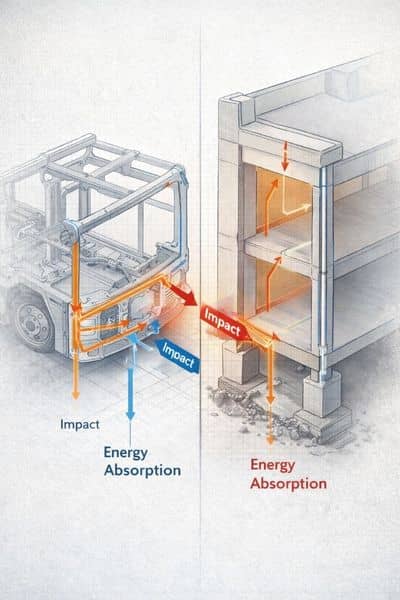
When the bus in the viral video took the hit, its structure handled energy and force in a controlled way. Civil engineering projects use similar ideas.
One key idea involves how structures handle energy. When an impact happens, energy moves through the structure. If a structure stays too stiff, the energy may cause sudden damage. Because of that, engineers design systems that absorb and spread that energy.
You can see this idea in many everyday structures. Guardrails bend when vehicles hit them. Bridge parts flex slightly under heavy traffic. Building frames move a little during strong winds. These small movements reduce damage and help keep the structure stable.
Another important part of engineering design involves how forces travel through a structure. Engineers call this movement a load path. In a well-designed structure, forces move safely from one part to another until they reach the ground.
For example, the roof of a building moves weight to beams. Those beams pass the load to columns. Finally, the columns carry the load into the foundation and soil. If this path becomes weak at any point, stress can build in one area. Over time, that weak spot may fail. Because of this, engineers carefully plan how loads move through the whole structure.
Engineers also add what is known as structural backup. This means the structure does not rely on only one part. If one piece gets damaged, another piece can still support the load. Bridges, buildings, and other structures often include several support members that work together. Because of this backup support, one damaged part usually does not cause a total collapse.
Why Structural Strength Matters for Real Projects
The viral bus video shows how strong design can handle a sudden hit. However, these ideas matter just as much in everyday construction and development projects.
Developers, property owners, and contractors deal with many real-world risks. Construction equipment moves around busy sites. Heavy materials place loads on structures. Weather conditions can also change quickly.
Strong engineering design helps manage these challenges.
For example, parking structures must handle vehicle impacts and daily traffic loads. Engineers design columns, barriers, and floor systems that help protect the structure from damage. At the same time, drainage systems must handle heavy rain and move water safely away from buildings. Engineers calculate water flow and design systems that help prevent flooding or erosion.
Roads give another good example. Over time, thousands of vehicles travel across the same pavement. Engineers choose materials and pavement thickness that help roads last longer under constant use.
These decisions happen long before construction begins. Engineers study site conditions, estimate loads, and design systems that stay stable over time. Because of this planning, most structures handle stress without people even noticing.
Engineering Design Protects Long-Term Property Value
When people watch a viral crash video, they often focus on the moment of impact. Engineers, however, focus on how structures perform over many years.
A building or infrastructure system must stay safe and stable for decades. Without proper engineering design, problems can appear sooner than expected. Structural cracks, water damage, and foundation movement can lead to costly repairs.
Careful design helps prevent these problems.
Engineers often strengthen parts that may face heavy loads or impact. They design drainage systems that move water away from foundations. They also choose materials that can last longer in different weather conditions.
These choices may not look exciting. Still, they protect the value of a property for many years. Because of that, strong engineering design can reduce repair costs and safety risks later on.
What Clients Should Know About Engineering Design
Property owners and developers usually focus on budgets, timelines, and permits. Those things matter. But before any design begins, it’s important to truly understand the site. That’s where services like accurate land surveying come in. By knowing property boundaries, elevations, and the lay of the land, engineers can plan more effectively and avoid surprises later on.
During the design stage, engineers study many factors that affect a project. They look at structural loads, soil conditions, drainage patterns, and material strength. They also consider how different systems connect with each other.
For example, drainage affects soil stability, soil conditions affect foundation design, and foundations support the entire structure above them. When engineers have a clear picture of the site from the start, they can make better decisions and design structures that stand the test of time.
Early planning like this helps projects move more smoothly. When engineers spot potential issues early, builders can address them before construction begins, saving time, money, and stress down the road.
Viral Moments Reveal the Value of Engineering Design
The viral bus crash gained attention because it showed a structure surviving a strong impact. Many viewers thought it was just luck. But engineers saw something different—they saw the result of careful planning, smart material choices, and thoughtful analysis.
These principles don’t just apply to vehicles. For any project, from buildings to bridges, relying on professional engineering design services ensures structures are built to handle stress, absorb energy, and stay safe under pressure. That’s why even everyday infrastructure, which rarely makes headlines, protects people and property day after day.
In the end, strong engineering design does more than create structures. It creates systems that remain safe and stable—even when unexpected events happen.