If someone knocks on your door and says they need access to your yard for a survey, your first reaction might be confusion — or concern. You may wonder who sent them, what they plan to do, and whether you must say yes. Recently, news stories and online discussions have raised questions about survey crews entering private property. Because of that, more homeowners now ask the same thing: Why does a residential surveyor need access to my land at all?
Why Property Access Requests Are Becoming More Common
Cities keep growing. Neighborhoods keep changing. New homes, additions, fences, and utility upgrades happen every day. Because of that, survey work now shows up more often in residential areas.
For example, when someone builds a fence, splits a lot, or starts new construction, a residential surveyor must confirm boundary lines and corner markers. However, property corners don’t always sit in easy spots. Sometimes they sit near a fence line, behind shrubs, or just across a neighboring yard.
So while the survey focuses on one property, the measurements may cross another. That’s when access requests happen.
In other words, access does not mean ownership. It usually means measurement.
What a Residential Surveyor Actually Does on Site
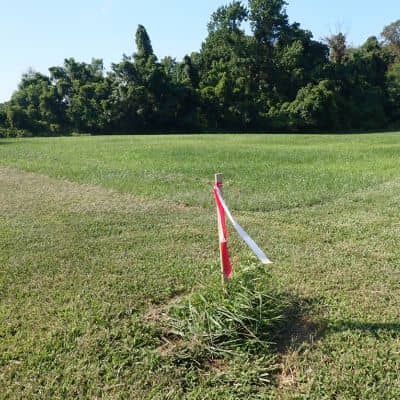
Many homeowners picture a surveyor just “looking around.” In reality, the work follows a precise process.
A residential surveyor:
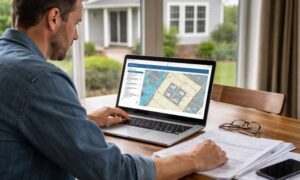
First, researches deeds and plats Then, finds or resets property corner markers Next, measures distances and angles between points Finally, checks everything against legal records
To do this correctly, the surveyor needs clear lines of sight between measured points. Trees, fences, and buildings can block those lines. Therefore, short-term yard access often solves the problem.
Most visits stay brief. Many take less than 30 minutes in a neighboring yard.
The Most Common Reasons You Might Get an Access Request
Not every survey request comes from the same situation. However, most fall into a few familiar scenarios.
Very often, your neighbor ordered a boundary survey for a fence or addition. The surveyor needs to verify shared corners. That step protects both sides from mistakes.
Sometimes, a nearby lot goes through subdivision or new construction. In that case, the residential surveyor must confirm ties to nearby boundary points.
Other times, utility or drainage work triggers measurement checks tied to recorded easements.
So while the project may not belong to you, accurate measurement still depends on nearby reference points.
Do You Have to Say Yes?
This question comes up a lot — especially after recent news stories about land access disputes.
The honest answer: it depends on the situation and local law. However, most residential survey work follows a simple pattern — surveyors request permission first.
Professional surveyors prefer cooperation because it saves time and prevents conflict. They usually knock, explain the purpose, and answer questions.
Moreover, good firms document access requests and respect property conditions. They do not force entry for routine residential jobs.
If the work connects to a recorded easement or government project, rules may differ. Still, you can always ask for details before you agree.
Signs You’re Dealing With a Legitimate Residential Surveyor
Trust matters. Fortunately, real survey professionals show clear signs.
A legitimate residential surveyor will explain who hired them and why. They will share a company name and contact number. They will describe the survey type and expected time on site. They will also answer questions without pressure.
In addition, many crews carry marked vehicles, safety gear, and professional instruments. They don’t hide their purpose.
If someone refuses to explain the job, pushes past your questions, or avoids identification, slow the conversation. Ask for proof before allowing access.
What They Will — and Will Not — Do on Your Property
Homeowners often worry about damage. That concern makes sense. However, residential survey work stays light and non-destructive.
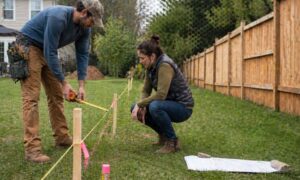
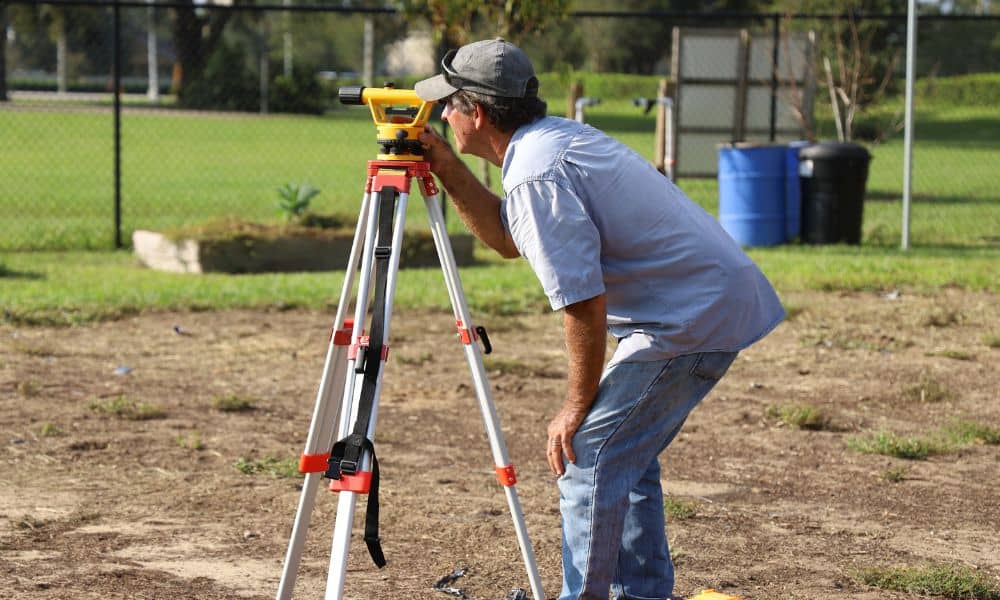
Surveyors place small flags or temporary markers. They take measurements with instruments on tripods. They may search for metal pins or capped rods at corners. They do not dig large holes or move structures during a boundary survey.
Also, they should leave gates as they found them and avoid landscaping damage whenever possible.
If you have pets, locked areas, or sensitive spots, mention them upfront. Good crews will adjust.
Why Allowing Access Often Protects You
At first, access feels like a favor to someone else. However, accurate surveys protect everyone involved — including you.
When a residential surveyor confirms true corners, neighbors build fences in the right place. Contractors avoid crossing lines. Future disputes become easier to settle with records and measurements.
On the other hand, blocked access can reduce measurement quality. That can increase the chance of conflicting results later.
So cooperation today often prevents arguments tomorrow.
Smart Questions You Should Ask First
Even though most requests stay routine, you should still ask a few basic questions.
Ask who ordered the survey. Ask what type of survey they perform. Ask which areas they need to enter. Ask how long the visit will take. Also, ask whether the survey touches your shared boundary.
These questions don’t create conflict. Instead, they create clarity.
Clear answers build trust fast.
Real-Life Situations Nashville Homeowners Face
Let’s make this practical.
A homeowner replaces an old fence but never checks the boundary. The new fence ends up two feet over the line. A later survey reveals the mistake. Now removal costs money.
Another owner builds a backyard studio close to the edge. A residential surveyor later shows a setback violation. Permit approval stalls.
Meanwhile, a new infill home goes up next door. The builder orders a survey. The surveyor asks for short yard access to confirm corners. The neighbor agrees. The job finishes cleanly, and both sides gain clear boundary records.
These situations happen every week — especially in growing cities.
Final Thoughts: Stay Calm, Stay Informed
When a residential surveyor requests property access, don’t panic. Instead, start a conversation. Ask questions. Confirm details. Most of the time, the request supports accurate boundary work — not intrusion.
Growth, remodeling, and redevelopment will continue through 2026 and beyond. Therefore, survey activity will also increase. Homeowners who understand the process will feel more confident and make better decisions.
And if you plan a fence, addition, or property improvement, talk to a qualified residential surveyor early. Clear boundaries save money, time, and neighbor relationships.